
Editorial
Activewear fabric and fit checklist: name the cloth, then the chart
Updated
StoreAtlas editors
Read as Markdown · Before you buy
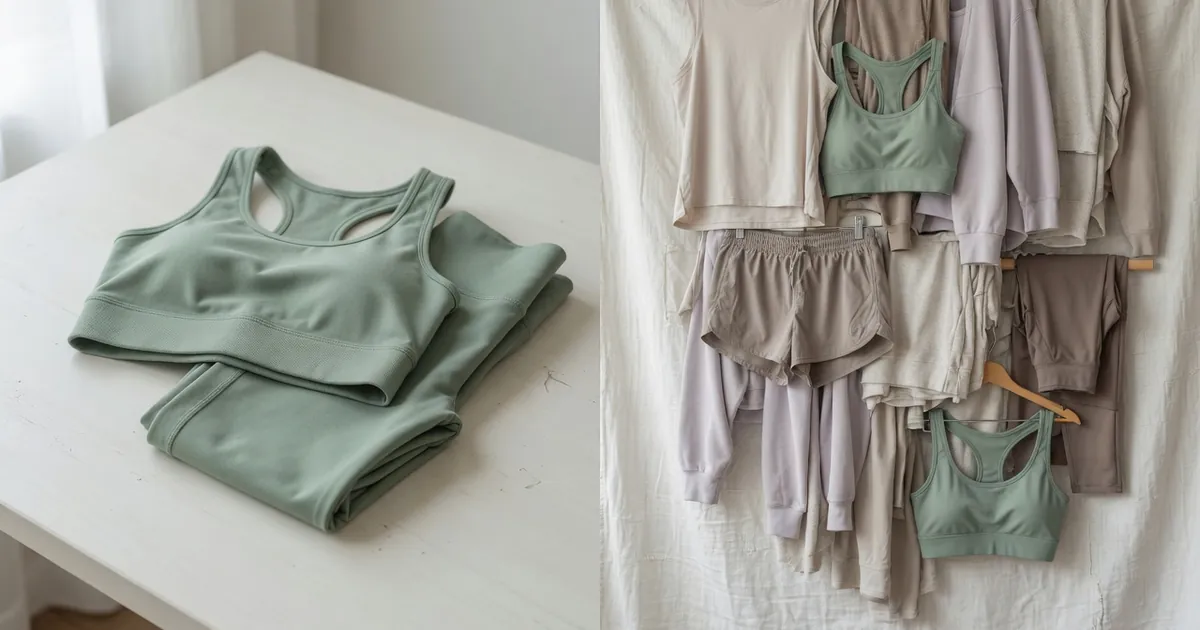
An activewear fabric and fit checklist is a way to read a product page before you trust a campaign still. It is not a ranking of brands, and it is not a compare with a winner. The same three questions show up on almost every training, yoga, and commute cloth host: what the fabric is called, what the brand claims that cloth does, and what the size chart says about your body on the day you buy. StoreAtlas lists these catalogs on the fitness hub and the activewear tag. Use the checklist on the brand host that actually sells the piece. Two familiar shapes of that job are lululemon, where Align, Wunder Train, ABC, Define, and Scuba are different fabric families on shop.lululemon.com, and Rhone, where men's commuter polos and performance layers are named cloth on rhone.com. A third shape is a color-pair set, which is a styling job you still finish by reading the fabric name. This note does not invent a universal compression number, a price, or a ship window.
Neighboring notes already split those catalogs. Vuori vs lululemon, lululemon vs Alo Yoga, Ten Thousand vs lululemon, Rhone vs Vuori, and Ten Thousand vs Rhone each stay on one job split. Size charts before you buy stays on how to read a table. This checklist stays on the order of operations: fabric name, then the brand's own words for compression or feel, then measurements, then ship-to. Pair it with fitness storefront notes.
Shopping tasks that are already written live on the jobs index. Brand rows live in the store directory. Returns and ship-to guides is the hub for unused-return habits and locale tables. A size that fits in one country chart can be a different cut on another regional host. Read the chart on the host you will pay.
Who is this checklist for?
Use it if you are about to buy training cloth and the still is louder than the fabric name. Who it is for: shoppers who will pause on a product page long enough to find the cloth name, the fit words, and the size chart, including people shopping a men's commute polo and people shopping a yoga tight. Who it is not for: shoppers who want a ranked list of the "right" brand, a single compression grade that every catalog shares, or a promise that a color story equals support. A campaign crop is not a size. A sweat demo is merchandising. A matching set is a color decision you still finish with a fabric line and a chart.
The checklist is also a poor fit if you already know the exact fabric name, your size on that chart, and the ship-to country, and you only needed the brand's policy page. In that case skip the essay and open the host. The checklist does not replace the product page. It tells you which lines on that page to read before the cart.
Read the fabric name before the still
Start with the name the brand prints on the product, not the name a caption invented. On a fabric-family wall, Align is not Wunder Train, and a men's ABC pant is not a studio tight with a different photo. On a men's commute grid, a polo and a performance layer can share a campaign and still be different cloth. On a color-pair set, the color is the navigation and the fabric name is still the product. Write the name down before you compare two tabs. If the two tabs do not use the same name, you are not looking at a refill. You are looking at two products.
If the page never states a fabric name and only offers a mood, treat that as a missing line, not as permission to guess. Go to the details, the fabric block, or the chart. If those are absent too, you do not yet know what you would be buying. StoreAtlas will not fill that gap with a lab claim. The brand host is the place that can name the cloth.
Read compression and feel as the brand's words
Compression, support, "naked," "sculpt," and "train" are labels. They are not a shared scale you can carry from one host to another. A brand may describe a tight as lighter or more compressive than another tight in its own line. That comparison is useful inside that line. It is not a number this note can convert into a lab unit, and it is not a promise that a commute polo uses the same idea of compression as a lifting tight. Read the words on the page you are buying. Then ask what job those words are attached to: yoga, run, lift, or desk-to-session.
A film that shows sweat is not a compression grade. A color story that looks sleek can still be a light cloth. If you need more support than the page's own words offer, choose a different fabric name on that host or a different host, and read the new page from the top. Do not add a grade the brand did not print. Do not treat We Made Too Much, a past season, or a regional colorway as automatically the same cloth as the full-price name you learned. Same name, different page: read it again. Different name: start over.
Read the size chart as measurements, not as a crop
Open the size chart on the regional host you will pay on. Read the unit. Read which body measurements the brand asks for. Read rise, inseam, and the fit note if the page prints them. A cropped photo hides all three. Men's and women's charts on the same brand are different tables. A polo's chest note is not a tight's waist note. A short's inseam is not a legging's inseam. If you are between sizes, believe the chart's own advice on that page. This note will not tell you to size up or down as a universal rule.
Regional storefronts can change the chart, the size run, and the colors that exist. A wide size run in one color is not a promise about the next color. Full-price inventory and a marked-down rail can be different stock. Measure on the day you buy if your last measurement is old. Then match the number to the chart in front of you, not to a memory of a different brand's size label. Labels are not body measurements. The chart is the brand's translation, and only that brand's.
Then confirm ship-to, and only then the cart
When the fabric name, the feel words, and the chart agree with the job you meant, confirm that the country you selected can receive the piece. A complete kit on a US homepage may not ship as that kit to you. A color that is live in one region can be absent in another. Returns are a habit on the policy page, not a number this checklist freezes. Unused-return habits and locale tables also sit on returns and ship-to guides. Worn cloth and final-sale pieces follow the brand's text the day you buy.
A short way to use it
Say the job in one line: yoga tight, run tight, men's commute polo, or a color-pair set. Find the fabric name that the brand attaches to that job. Read the compression or feel words as that page's words only. Read the chart in the unit it prints, on the regional host you will pay. Then confirm ship-to. If the first decision is a named family such as Align, Wunder Train, ABC, Define, or Scuba, start at lululemon and still run the checklist on shop.lululemon.com. If the first decision is a men's commuter cloth, start at Rhone and still run the checklist on rhone.com. Use the directory row for who the catalog fits. Use the brand host for the piece in the cart.
Questions
- Does this checklist rank activewear brands?
- No. It is an order of operations for any training, yoga, or commute product page: fabric name, the brand's own feel words, the size chart, then ship-to. lululemon and Rhone are examples of two catalog shapes, not a podium.
- Is there one compression number every brand shares?
- No. Words like support, sculpt, or train are labels inside that brand's line. They do not convert into a shared lab unit. If the page does not print a grade, do not invent one. Read the next fabric name from the top.
- Can I size from the photo?
- A crop hides rise, inseam, and the measurement the chart asks for. Men's and women's tables differ. A polo's chest note is not a tight's waist note. Use the chart on the regional host you will pay, in the unit it prints.
- What if two products share a campaign?
- Shared photography does not make them the same cloth. If the fabric names differ, start over. Full-price inventory and a marked-down rail can also be different stock even when the name looks familiar.
- When do I check shipping?
- After the fabric name, the feel words, and the chart match the job you meant. Then confirm the country you selected can receive the piece. Return habits live on the brand policy page. This checklist does not freeze a window or a rate.