
Editorial
CBP §321 Checkout: Recheck the Holiday Landed Cost
Updated
StoreAtlas editors
Read as Markdown · Before you buy
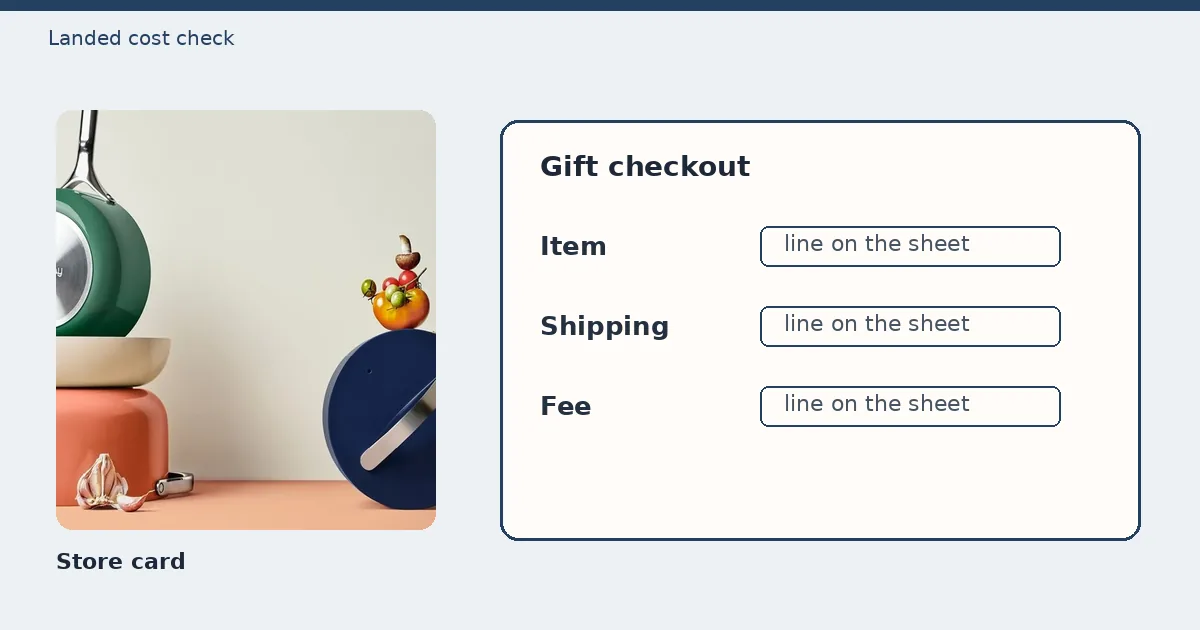
Public list pages have mentioned a CBP postal §321 timing story, and they have described low-value parcel treatment as still tightening. Read that as a buyer prompt before you pay for a holiday gift that ships as a China-direct parcel, not as a seller desk. A headline about a low-value rule is not the total on your row. Landed cost, for a shopper, is the item, the shipping line, and any duties or fees the page shows before you confirm. Open the merchant in the store directory, compare an offer you can read in deals, and match a clearer direct-to-consumer store card when the parcel total is murky.
This note does not invent a coupon percentage, a sticker, a winner, or a count of transit days. A roundup figure is not your line. If the page prints a duty, a tax, or an extra fee, count it. If it does not, mark the fee absent. Do not fill the silence from a headline. This note does not tell a seller how to classify goods or answer a border agency.
This is not a carrier rate-card note, and it is not an exclusion-calendar note. A postage headline or a tariff-list headline does not replace your sheet. A crossed shelf price is a different check. Here you add the item, shipping, and any duties or fees the review step shows.
The returns and ship-to guides cover delivery questions after an order exists. The blog holds other buyer notes. A store card on /s is where you match a merchant name before a seasonal price in deals looks settled.
A headline is not your parcel total
Shoppers hear that low-value treatment is being discussed, and they stop reading the checkout. The page in front of you can still show three different situations, and only one of them is yours.
- A product page that prints the item, a shipping line, and a duty or fee line for this parcel, in the currency you will pay. - A product page that prints the item and shipping, and stays silent on duties and fees. - A marketplace row whose goods price looks low, while the brand card prints a calmer all-in total you have not opened.
Write which situation you are in before you treat a §321 headline as a reason to rush. A list page does not, by itself, change the row you are paying. If the page is silent on duties and fees, mark those lines absent. Do not invent a threshold or a fee so the gap looks finished. You see the lines on the page you will accept, not in a headline.
China-direct, here, means the page says the parcel starts with a seller or warehouse it ties to China, not from a shelf already in your country. If the page is silent, write "origin unknown." Do not borrow an origin from a roundup.
What to line up before you pay
The buyer check is a short sum, not a mood in a seasonal banner.
- The item price on this order, in the currency the payment sheet uses. - The shipping line, if the page prints one. Copy the words the page uses. - Any duty, tax, or extra fee the page shows. If a line is missing, write "absent." - The merchant name on the payment sheet, next to the store card.
On the review step, read:
1. Whether the item, the shipping line, and any fee belong to the same goods, size, and color. A fee on a different variant is a different claim. 2. Who takes payment: the marketplace, the seller, or a name that appears only on the last sheet. Landed lines belong to the page you accept, not to a headline. 3. Whether the page says the parcel starts in China or somewhere it does not name. If it gives no origin, write "origin unknown." 4. Currency on the item, on shipping, and on any duty or fee. Read each code before you add. 5. A second row in the basket. Add each merchant on its own. A quiet fee line on one row does not shrink the other. 6. Whether a later message could add a charge the page never showed. If the page is silent, later charges are unknown.
If you can point at the item and at shipping, and you can mark every duty or fee as printed or absent, you have a landed picture for this page. If you cannot, you do not have a comparison yet.
The public naming is a prompt, not your row
List pages restate a public story: a postal §321 timing note is in the headlines, and low-value parcel treatment is described as tightening. Keep that in the public-framing box.
- The headline is a cue to recheck the total. It is not proof that every China-direct parcel faces the same charge. - A fee discussed in a roundup is not a fee on the brand card in front of you. - Only the page you will pay answers which lines exist on your row. - This note does not quote a statute, a notice, a cap, or a penalty. Public titles are enough. The buyer task is the sum.
If the page will not show item and shipping before you confirm, do not confirm. A tightening headline is not a reason to skip the sheet.
A marketplace row and a brand card
The same goods can appear inside a marketplace and on the brand's own site. Those are different offers. The item, the shipping line, and any duty or fee can belong to different parties.
Open /s and read the card. Then read merchant name, item price, shipping, and any duty or fee on the marketplace page. If the names differ, do not average them. Believe the page you are about to pay.
Use the store directory when you want a merchant that states who sells the goods and where a return starts. A clearer direct-to-consumer card is the better holiday order when you can point at item, shipping, and any fee the card prints. When the marketplace total is murky and the goods match, prefer that card. Use deals only for offers you can open. A badge in a roundup is not an offer.
A postage hike and a tariff exclusion date are neighboring stories. They do not replace this sum. If a page still hides your shipping line, the line is absent.
Holiday baskets and a second parcel
Holiday baskets often add a second gift. Read the total on the order you will confirm, not the teaser that brought you in, when those differ.
- A gift quantity can change the item total or the shipping line. Read the sheet again. Do not reuse the first sum. - If a code box sits above the shelf, apply it on the review step and read item, shipping, and fees again. If the page does not show the result, the result is unknown. - If only your account can open a return, tell the recipient before the gift is opened. The returns and ship-to guides sit beside this check. - If two gifts come from two sellers, you have two sums. A clear total on one row does not cover the other. - A seasonal banner is not a transit count. This note does not invent day windows, and it does not promise that a headline keeps a fee off your parcel.
Compare one direct-to-consumer card in the store directory before you accept a marketplace row only because a headline made the goods price look small.
What not to copy from a roundup
- Do not copy a headline fee onto your row. Read the product page. - Do not invent a percentage, a cap, a winner, or a "usual" duty so the sum looks exact. - Do not treat a postal timing title as proof that every parcel shares one charge. - Do not ask a seller how to classify a gift. Read the item, the shipping line, any duty or fee the page shows, and the merchant you pay. - Do not treat a strikethrough as this check. That is a different comparison. Here you add the lines that make a landed total.
A method you can repeat
1. Name the goods, the size, and the color before you follow a seasonal card. 2. Copy the merchant name. Open the same name on /s or in the store directory. If the names differ, stop. 3. Copy the item price and the shipping line. Copy any duty, tax, or extra fee. If a line is missing, write "absent." 4. Note the origin the page states. If it is silent, write "origin unknown." 5. Open the brand card when you have one. Copy the item, shipping, and any fee you can see today. If you cannot open it, write "unknown." 6. Read who may start a return and which country that path uses. A landed sum without a return path is still an incomplete page. 7. Compare one merchant you can read in deals. If the marketplace total stays murky, prefer the clearer direct-to-consumer card. 8. Save the review screen next to the merchant name, including any duty or fee, or the word "absent."
If the page will not show the item and the shipping line before you confirm, do not confirm. A §321 headline is not a reason to skip the sheet.
After you pay
Save the payment sheet. If the order split, track each order number and each merchant on its own. A later fee message about one seller is not a fact about the other.
When a later message mentions a duty or a low-value rule, open the saved sheet before you assume the headline explains it. If support quotes a different total, answer with that screen. A charge the review step marked absent is a new fact. The headline does not rewrite the sheet you accepted.
If you send goods back, follow that merchant's return path and keep proof of dispatch. Do not send the parcel to an address you found in a headline. Know which total you accepted, which merchant you paid, and which return path belongs to that payment.
A second checkout is a new sum. A fee that appeared after you paid does not rewrite the total you accepted.
Questions
- Does a §321 headline change the total I pay?
- No. The headline is a public prompt that low-value parcel treatment is being discussed. Your sum is the item, the shipping line, and any duty or fee this page shows. If a fee line is missing, mark it absent.
- What counts as landed cost on the page I will pay?
- The item price, the shipping line, and any duties or fees printed before you confirm. Read each currency code before you add. A number from a roundup is not part of that sum.
- May I paste a fee from a list title onto my gift?
- No. This note does not publish percentages, caps, winners, or transit-day windows. Copy only the lines on your product page and on the review step.
- When should I prefer a direct-to-consumer store card?
- When the marketplace total is murky and a brand card shows the same goods, size, and color with item, shipping, and any fee you can point to. Match the merchant name on /s or in the store directory. If the names differ, do not average them.
- Is this a seller guide for customs codes?
- No. The buyer task is to recheck landed cost on a China-direct holiday parcel, then compare a clearer store card. It is not a carrier rate card, an exclusion calendar, or a strikethrough check.